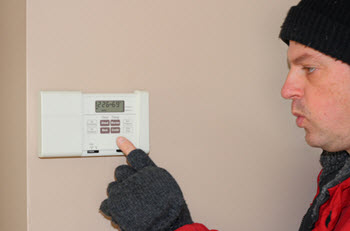
 Many homes experience uneven temperatures. Homeowners will find that the temperatures in their home vary from one room to another. This issue is common in multi-level houses.
Having uneven home temperatures leads to discomfort. Since you are paying for the energy that your central air conditioning uses, it can be frustrating when you do not receive optimum thermal comfort. Fortunately, there are many ways you can solve this heating and cooling issue.
One of the best ways to address uneven temperatures in your home is by calling Point Bay Fuel. Our NATE certified technicians can offer you the best heating and cooling solutions for you to receive a high level of comfort. All of our services come at honest prices.
Our technicians have years of knowledge and experience. They will ensure that your HVAC system can provide you with the highest level of performance. When you need an HVAC installation, repair, or tune-up, give us a call us today. We also offer free estimates.
AC Zone Control: How To Deal With Uneven Home Temperatures
In some cases, small issues (and easily repairable issues) can cause uneven home temperatures. Below, you will find some of the causes of these problems and the best way to deal with them.
Check The Thermostat
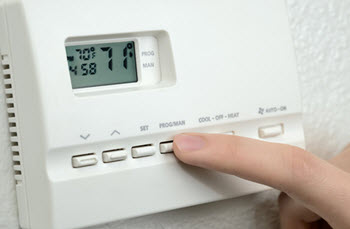 Thermostats are usually placed in the living room. Your thermostat best controls the temperature in the room that it is placed in. Therefore, when your living room reaches the set temperature, your system tends to shut off to prevent overheating. Consequently, your HVAC system will shut off even when the rest of your home hasn’t reached the set temperature yet.
A quick fix for this is to set your system’s fan setting to ‘on’ instead of ‘auto.’ When you set your HVAC system to ‘auto,’ the fan runs when your system is cooling the room. On the other hand, when it is set to ‘on,’ your fan stays on continuously. This way, it circulates the conditioned air throughout your home and helps even out the temperature between rooms.
Redirect Air Vents
The air vents help disperse the conditioned air from your system. If you are experiencing inadequate cooling or heating in your home, check to see if there are pieces of furniture that are blocking your air vents. For example, you might have rearranged your furniture and placed a large bookshelf in front of an air vent. Also, if an air vent is next to a window, make sure that the curtain isn’t blocking the vent. You also have to make sure that your air vents are not clogged with dust and debris. If they are, then vacuum and clean them immediately.
You can also redirect the air from your air vents. You can do this by partially closing the vents on the rooms on the first floor so that it redirects the air to the second floor. This way, your system will not build up with pressure. At the same time, you will achieve adequate cooling or heating throughout your home.
Clean Air Filters
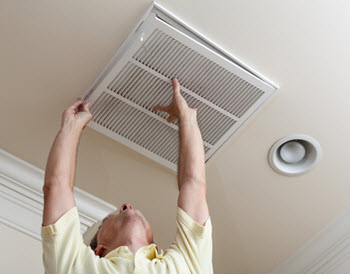 The air filter in your HVAC system is responsible for trapping dirt and other debris. It ensures that you have healthy indoor air quality. However, as time passes, dust and other contaminants accumulate in your air filters. This dense buildup creates an obstruction.
When you have clogged air filters, it means that your home does not have proper airflow. Without adequate airflow, you won’t be able to receive the conditioned air in all of the rooms of your home. Therefore, some of the symptoms of a dirty air filter include uneven temperatures. To prevent this from happening, make sure that you replace your air filter regularly.
Check The Ductwork
The system of air ducts allows the conditioned air to travel before it is released out of the air vents. Unfortunately, if there are leaks, tears, or holes in your ducts, then the conditioned air bleeds out instead of reaching its destination. Not only that, but your HVAC system will end up working harder to make up for the leaked air. Ductwork leaks can cause more significant problems than uneven temperatures.
Contact a professional HVAC technician to check your air ducts for leaks. They have pressurizing equipment which will help them locate leaks easily. Also, techs can seal these leaks in no time.
The Right HVAC Size
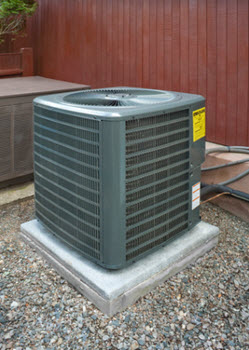 The HVAC size refers to its tonnage. Tonnage, or ton, is the amount of heat your system can remove from inside your home per hour. If you have an HVAC system that’s too small for your home, then you will inevitably experience inadequate cooling. For instance, when your thermostat is set to a low temperature, you will find that the actual temperature of your home does not match the thermostat setting. Having a system that is too small may result in hot areas in your home even though your HVAC system is working.
Contact a trusted HVAC contractor to help you with this issue. A professional can conduct a Manual J Load Calculation for your home. This way, you’ll know the HVAC system size that best fits your heating and cooling needs.
Install A Ductless Mini-Split Heat Pump
Consider installing a ductless mini-split heat pump. These multi-zone HVAC systems work perfectly when supplementing your existing central air system. When you have a ductless mini-split heat pump at home, you can create a zone which allows you to regulate the temperature independently.
Moreover, you can set the ductless mini-split heat pump’s thermostat based on your preference and needs. You can also turn off the heating or cooling system in rooms that you do not use. This energy-efficiency results in lower electrical bills at the end of each month.
Conclusion
Uneven home temperatures are annoying, especially during the summer. Fortunately, there are also many ways you can solve this cooling issue. For instance, you can supplement your existing HVAC system. You also need to make sure that your current system is working in excellent condition.
When searching for “HVAC companies near me,” make sure to call Point Bay Fuel. Our certified technicians know the best solutions to meet your heating and cooling needs. Some of our specialties include A/C installations, furnace repairs, replacements, tune-ups, and more. Best of all, we offer the best HVAC repair costs and HVAC services in the area.
By working with us, you will find that our staff is courteous and friendly. Customer satisfaction is one of our top priorities. Call us today to schedule a free estimate. We will be happy to answer all your HVAC queries.
Click here to contact us or call us at (732) 349-5059 to speak to one of our home comfort specialists!
The post How To Deal With Uneven Home Temperatures appeared first on Point Bay Fuel.

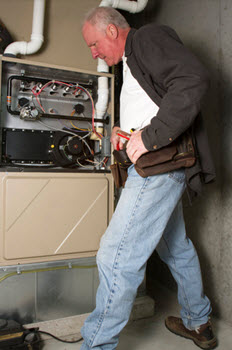 Like many homeowners, you are probably looking for ways to lower your heating costs. The US Department of Energy reports that a household spends around $2,200 on energy bills, half of which goes to your heating and cooling costs. Fortunately, there is a way to lower this cost.
 Dust, dirt, and other particulates accumulate in a furnace over time. This buildup can affect the furnace’s performance and efficiency. An inefficient heater will drive your utility bills up.
 A maintenance checkup improves the overall energy efficiency of your furnace. An energy-efficient heating system means you are receiving sufficient heat without using more energy than necessary. This way, you will enjoy lower utility bills at the end of each month.
 Summer is here, and it is the time of year to enjoy the sunny weather and outdoor activities. However, if you find yourself sniffling and coughing in bed instead, you might wonder what could be causing these respiratory issues. Unfortunately, the culprit may be your HVAC system.
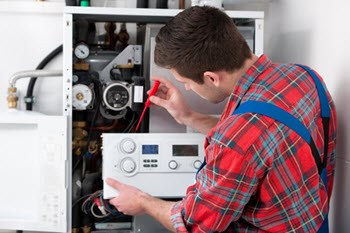 Your HVAC system is in charge of maintaining your indoor air quality. In this article, we will explore how a dirty HVAC system can cause a variety of respiratory problems for you and your family.
 Dirty air ducts circulate dust, pollen, and other allergens inside your home. These allergens promote trouble with breathing and respiratory illnesses. If you find yourself coughing, getting sore throats, and sneezing more often than before, then it is possible that it is time to get your ductwork checked and cleaned.
 Aside from respiratory issues, listed below are other illnesses a dirty HVAC system can cause:
 Purchasing a new
 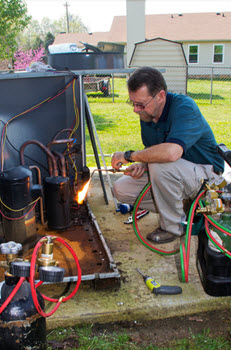 Below are some of the things you need to know about A/C size and why it is essential to have the appropriate size installed in your home.
 An oversized AC, on the other hand, is no better than one that is too small. A massive air conditioner cools your home quickly. However, an AC that goes through the refrigeration cycle faster than it should will cause short cycling.
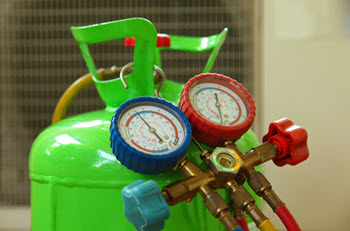 The refrigerant is a vital substance used in air conditioning systems. Air conditioners cool down your home through the refrigeration cycle. With this in mind, it is always a great idea to know how your AC works in general. After all, it is essential that you know about the electronic systems that operate in your home.
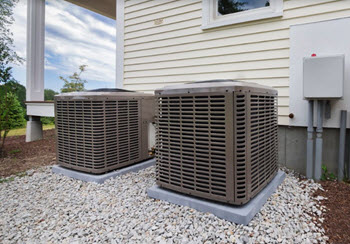 The refrigerant in your AC is a low-pressure gas that is part of the continuous cycle that happens when the refrigerant moves between the indoor coil and the outdoor coil. These coils are copper, which is an excellent conductor for heat transfer. When the coolant is in the indoor coils, it absorbs heat from indoors. The hot gas then moves to the outdoor condenser coils. Here, the coils release heat through condensation. Afterward, it becomes gas again. Fans push cold air into your home while your AC pushes hot air outside. The process then repeats.
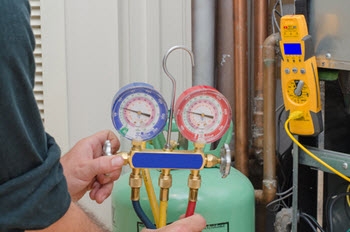 Listed below are the three most common types of refrigerants used over the years.
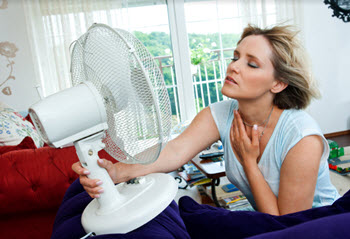 Imagine coming home after a long and hot day. Since the
 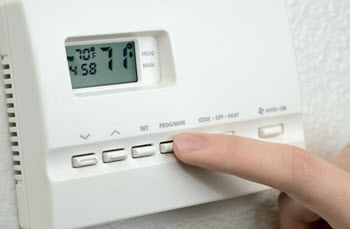 Check your thermostat. Someone might have changed your standard thermostat settings. Make sure that your thermostat isn’t on ‘heat.’ If it is, simply set it back to ‘cool’ and see if it starts blowing cold air.
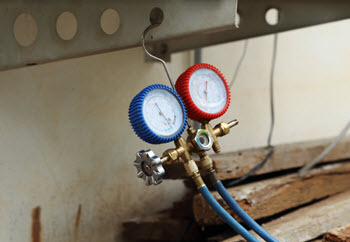 When an AC blows warm air, it could have refrigerant issues. The refrigerant is the cooling chemical blend used in your AC’s refrigeration cycle. An AC does not lose any refrigerant during this cycle. However, from time to time, an air conditioner has a refrigerant leak, where the coolant loses its charge, and the AC is unable to cool your home correctly.
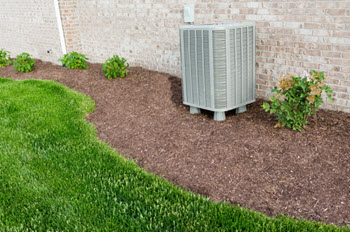 Another central component of your AC unit is the condenser. It is the outdoor unit made up of a compressor, cooling fins and tubes, and a fan. However, when your condenser gets dirty, the process of heat transfer that happens with your refrigerant and the outdoor unit’s immediate surrounding is not as effective. In turn, this might be the cause of the warm air blowing into your home. Make sure that you schedule an annual tune-up to prevent this from happening.